How we make a
SHUG card
When we first started making SHUG, aged 7 and 10, the artwork was a mishmash of hand-drawn cards, doodles, and collages from images we printed from the internet in the early 2000s.
Back then, we imagined the characters in enormous detail (and more than we could achieve at the time). We were obsessed with the worlds of The Lord of the Rings, Yu-Gi-Oh!, Monty Python, Flanimals, and countless other strange and wonderful things. As we grew up, our influences expanded to include medieval manuscripts, medieval painting, and artists such as Hieronymus Bosch.
By the time we began reworking the cards as adults, we had also spent years developing our own techniques as illustrators and animators. What you see on a finished SHUG card comes from all those influences, combined with the drawing, painting and animation skills we've developed over the years.
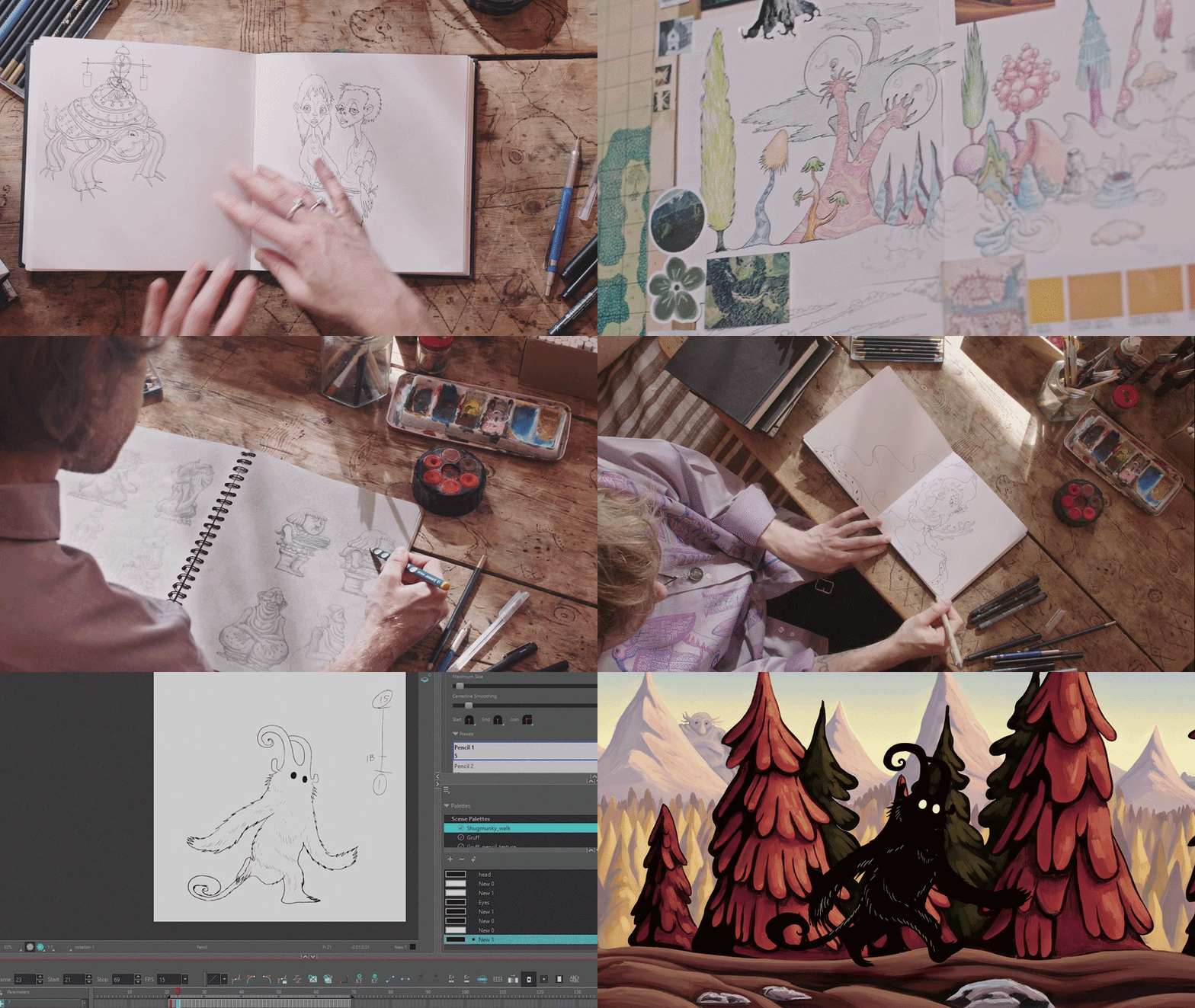
We've put together this little explainer for anyone who's curious about how a card comes together. Not every card follows exactly the same path, but this is a good overview of our process.
1. Sketching
Everything starts on paper. We draw the cards into sketchbooks, usually with pencil, although sometimes we go straight in with pen. Sometimes we'll gather visual references, perhaps from a medieval manuscript or an old painting. Other times we'll look back at our childhood drawings. And sometimes we don't use references at all, we just draw whatever has appeared in our heads and makes us chuckle or haunts our dreams.
2. Digital Inking
Once we're happy with the drawing, we scan it and redraw the lines digitally using a tablet. We use Wacom tablets and a mixture of different software, but our preferred program for linework is Toon Boom, which is actually animation software. We love it because its vector linework tools are particularly sophisticated, and they give us the control we want over capturing the character of the drawings in our sketchbook.
3. Blocking in the Colour
We then start building up the colours and shading. We sometimes do tests of the colour using watercolours or coloured pencil on the drawings, and use these as reference for when we start digitally painting.
Toon Boom is great for blocking in because the artwork is vector-based, it's very easy to fill in the lines, and then experiment with colours, adjust them later, and build up shading using different brushes. At this stage the card starts to look very close to the finished thing, but there's still a lot of work to do.
4. Painting, Colour and Texture
Once we've established the basic colours and shading, we often move the artwork into Photoshop.
This is where we really start to paint the nice layered brush strokes into the image. We can also adjust colours further here, add textures and experiment with extra brush styles on layers. If we have a change of mind about a detail here or there, we might even change those things quite substantially at this point, like what sort of mop Hairy Meg is holding, or if there is a mountain in the background, depending on what the card needs. Mostly though, this is about getting the painting strokes and colours looking rich and refined. We aim to give the artwork depth, atmosphere and visual richness while still keeping the character and drawing at its centre.
5. Grading and Rendering
To refine the artwork further, we use AI-assisted tools in Photoshop or elsewhere as part of the rendering process. We use these tools at this later stage to assist with things such as painting depth, colour matching across cards, added texture and overall grading.
6. The Final Card
Finally, we keep tweaking. We adjust colours more. We may add details. Things that don't feel right get removed. Sometimes we'll go backwards through the process and redraw or repaint something entirely.
A finished card on average represents at least 24 hours of drawing, painting, experimenting, tweaking and polishing, along with all the time spent thinking about the character, imagining the lore and figuring out what the card should actually do. With over 300 cards, we sometimes question our sanity. Our skills have developed quite a bit since we were 7 and 10, but the part that hasn't changed is that it is just us brothers still crafting every card together!